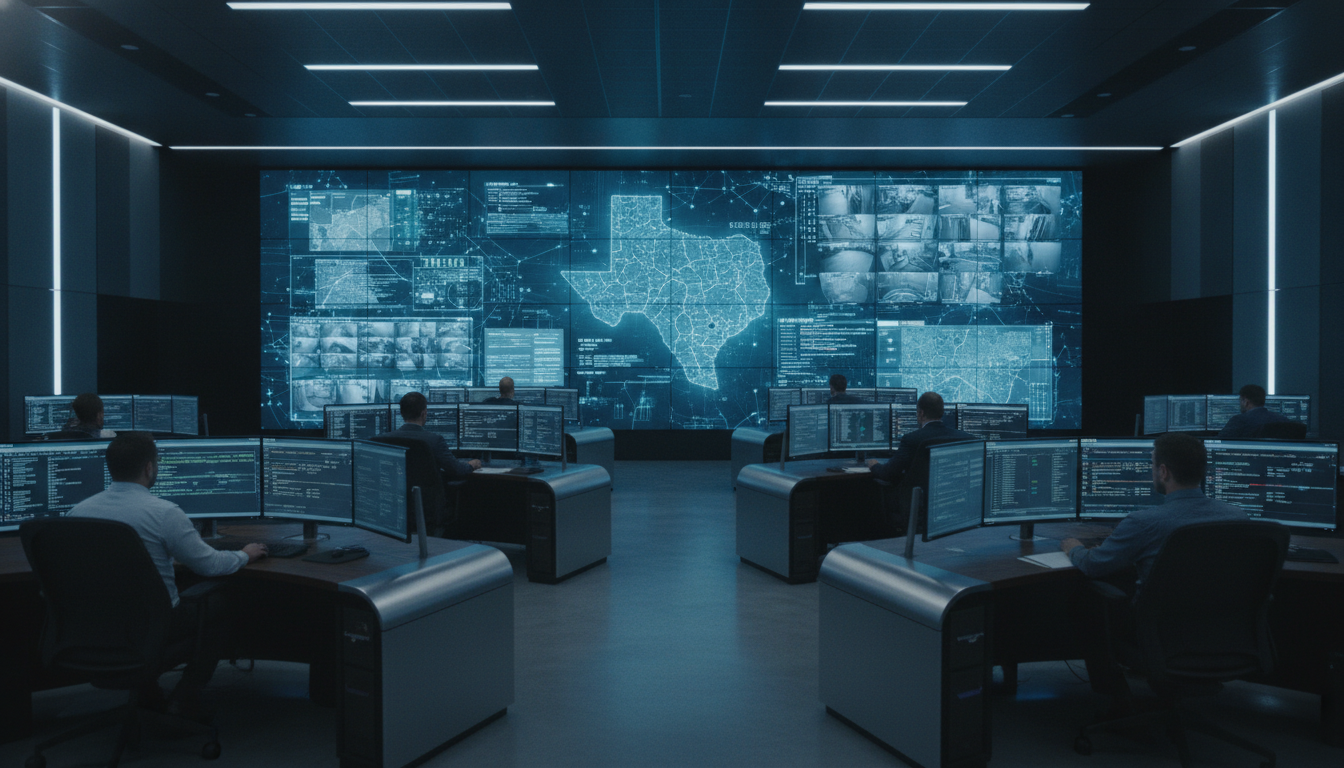
In the security and surveillance industry, operational downtime is not an option. Whether you are running a 24/7 central monitoring station, a cybersecurity Security Operations Center (SOC), or a physical patrol dispatch hub, your facility serves as the critical line of defense for thousands of clients across Texas. To guarantee continuous protection, your infrastructure relies on massive video walls, high-density server racks, and sophisticated dispatch communication networks that run non-stop. However, maintaining this level of operational readiness requires immense, continuous power—creating a heavy baseload that can quickly erode your operational margins if left unmanaged.
The 24/7 Command Center Load: A Predictable Baseload with High Stakes
Unlike standard commercial offices that shut down at 5:00 PM, a security monitoring facility operates on a flat, continuous energy profile. Your video walls never turn off, your localized server racks continuously process data, and your HVAC systems must run constantly to keep high-density hardware from overheating. On the deregulated ERCOT grid, this continuous, round-the-clock consumption pattern gives your facility a distinct commercial advantage known as a high “load factor.”
Because your energy usage is steady and lacks the dramatic peaks and valleys of typical daytime businesses, commercial energy providers view your facility as a highly attractive, low-risk customer. This consistent demand profile allows security executives to negotiate highly competitive terms. Securing fixed rate business electricity plans is the most effective way to leverage this high load factor, transforming your constant operational demand into long-term budget predictability.
Navigating the Texas ERCOT Grid: REPs vs. TDSPs
To successfully optimize your energy strategy, it is essential to understand how the Texas energy market operates. While physical power delivery, local grid infrastructure, smart meters, and emergency line maintenance are handled by your regional Transmission and Distribution Service Provider (TDSP)—such as Oncor, CenterPoint Energy, AEP, or TNMP—you have the absolute right to choose your Retail Electric Provider (REP).
This separation of utility delivery and retail supply means security firms are not locked into monopoly pricing. By working with an expert commercial energy broker, your facility can bypass generic, off-the-shelf retail products and secure customized contracts tailored directly to your continuous baseload requirements.
Mitigating Volatility with Smart Contract Structures
The Texas energy market is famous for its extreme price volatility, particularly during summer heatwaves and winter storm events when demand spikes across the ERCOT grid. For a facility that cannot reduce its power consumption during peak hours without compromising client safety, relying on index or variable-rate plans is an unacceptable risk. A single grid event could result in astronomical wholesale price spikes that devastate your monthly utility budget.
By locking in fixed rate business electricity plans, your firm establishes a reliable shield against market volatility. A fixed-rate contract ensures that your cost per kilowatt-hour remains constant, regardless of weather extremes, grid instability, or fluctuating wholesale market conditions. This financial predictability allows your leadership team to project annual operating expenses accurately and allocate capital where it matters most: expanding your surveillance technology and scaling your response teams.
How Electricity Partners Simplifies Your Energy Procurement
At ElectricityPartners.com, we act as your dedicated commercial guide, navigating the complex Texas energy market so you can focus on threat response and client safety. We analyze your unique consumption patterns, identify hidden demand charges, and negotiate directly with top-tier REPs to secure custom, cost-effective energy solutions.
We simplify the procurement process into three straightforward steps:
- Submit Your Info: Enter your zip code or upload a copy of a recent commercial energy bill.
- Analyze and Compare: Our experts compare tailored rates and risk structures optimized for high-load, 24/7 operations.
- Secure and Transition: Sign up or consult with our commercial specialists in minutes to lock in your contract with zero disruption to your daily operations.
Conclusion: Protect Your Margins While You Protect Your Clients
Your command center is built on redundancy, reliability, and precision. Your energy contract should be no different. By partnering with an expert broker to leverage your high load factor, you can secure budget certainty and protect your bottom line from the unpredictable swings of the Texas energy market.
Ready to secure a tailored, cost-effective energy plan designed for your Texas security firm or monitoring center? Call 866-515-8297 today to speak directly with our commercial energy experts.
Frequently Asked Questions
Why does a 24/7 security monitoring center have a high load factor, and how does it affect energy pricing?
A high load factor indicates that a facility uses energy at a relatively constant rate throughout the day and night, without dramatic spikes in demand. Because security command centers operate video walls, servers, and cooling systems 24/7, their energy profile is flat and highly predictable. Retail Electric Providers (REPs) favor this consistent usage because it allows them to purchase wholesale power more efficiently, enabling them to offer highly competitive pricing structures to these facilities.
How do TDSP delivery charges impact my commercial energy bill?
TDSP charges are set by your local utility company (such as Oncor or CenterPoint) to cover the physical delivery of electricity, grid maintenance, and smart meter infrastructure. These charges are regulated by the Public Utility Commission of Texas (PUCT) and are passed through to your bill regardless of which Retail Electric Provider you choose. While you cannot negotiate TDSP delivery rates, you can negotiate the retail supply rate, which represents the majority of your total energy spend.
Can we consolidate energy contracts for multiple dispatch hubs and patrol offices across Texas?
Yes. If your private security firm operates multiple local dispatch hubs, branch offices, or patrol stations across different deregulated regions of Texas, you can aggregate your total load. By bundling the energy demand of all your locations into a single commercial portfolio, you can command stronger purchasing power, secure better wholesale pricing, and streamline your corporate accounting with consolidated billing.